
Faculty of Health and Applied Science
The Faculty of Health and Applied Science is dedicated to developing skilled, ethical, and competent professionals equipped to meet the demands of the health, science, and applied technology sectors. The faculty offers programmes that integrate theoretical knowledge with practical, hands-on training, ensuring graduates are prepared for real-world application in healthcare and applied science settings. Emphasis is placed on innovation, critical thinking, professionalism, and community responsiveness, enabling graduates to contribute effectively to national development and the wellbeing of society.
HEALTH ARTIFICIAL INTELLIGENCE PROGRAMMES
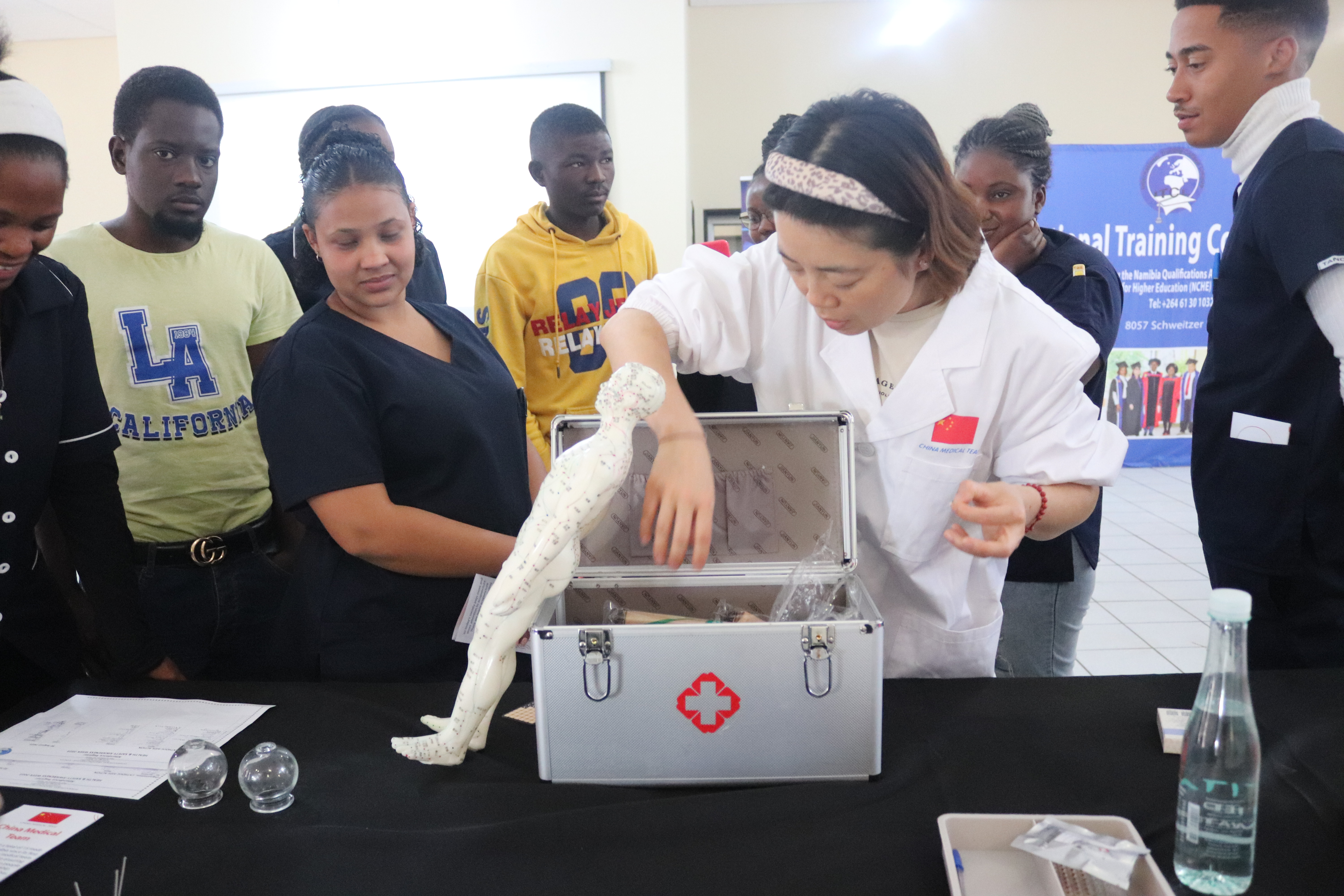
Certificate in Health Artificial Intelligence NQF Level 4
Mode of Study: Full-Time / Part-Time / Distance
Duration: 1 Year
Programme Description
The Certificate in Health Artificial Intelligence (AI) is designed to equip learners with foundational knowledge and practical skills in the application of artificial intelligence within healthcare environments. The programme focuses on the use of AI for health data management, diagnostic support systems, and digital health solutions. It prepares learners for entry-level roles in health informatics and healthcare technology while promoting ethical awareness in the handling of patient data and the responsible use of AI technologies. In addition, the qualification provides a pathway for progression to higher-level studies such as diplomas in health technology, artificial intelligence, or information and communication technology, thereby contributing to the growing demand for digitally skilled professionals in the healthcare sector.
Entry Requirements
Applicants may be admitted to this programme if they have successfully completed secondary education (Ordinary Level or equivalent) with passes in core subjects such as Mathematics, English, and Science. Candidates must have obtained a minimum of 14 points in six subjects in the Namibia Senior Secondary Certificate Ordinary (NSSCO) or Advanced Subsidiary (NSSCAS), or an equivalent qualification. Alternatively, applicants may enter with an accredited NQF Level 3 qualification in AI in Health from International Training College–Lingua or an equivalent qualification in a related field from a recognised institution.
Certificate in Health Artificial Intelligence NQF Level 5
Mode of Study: Full-Time / Part-Time / Distance
Duration: 1 Year
Programme Description
The aim of the Certificate in Health Artificial Intelligence (AI) at NQF Level 5 is to develop learners’ knowledge and practical competencies in the application of artificial intelligence technologies within healthcare systems. The programme equips learners to support clinical decision-making, health data management, and digital health innovations through the responsible use of AI tools. Graduates will be able to apply AI techniques to areas such as diagnostics, patient monitoring, and medical research while adhering to ethical, legal, and professional standards in the handling of sensitive health information. The qualification prepares learners for progression to higher NQF levels and enables them to contribute effectively to improved healthcare delivery, operational efficiency, and innovation in both public and private health sectors.
Entry Requirements
Applicants may be admitted to this programme if they have successfully completed a Certificate in Health Artificial Intelligence (NQF Level 4) from International Training College–Lingua or an equivalent qualification from a recognised institution. Alternatively, applicants may be admitted with a Namibia Senior Secondary Certificate Ordinary (NSSCO) or Advanced Subsidiary (NSSCAS), or an equivalent qualification, with a minimum of 14 points in six subjects, including Mathematics, English, and Science. Admission may also be considered for applicants holding an accredited NQF Level 3 qualification in Health AI or a related field from a recognised institution.
Diploma in Health Artificial Intelligence NQA Level 6
Mode of Study: Full-Time / Part-Time / Distance
Duration: 2 Years
Programme Description
The Diploma in Health Artificial Intelligence (AI) at NQF Level 6 provides learners with advanced theoretical knowledge and applied skills in the integration of artificial intelligence technologies within healthcare systems. The programme prepares graduates to design, implement, and evaluate AI-driven solutions that enhance diagnostics, medical imaging, patient monitoring, telemedicine, and health data management. Strong emphasis is placed on ethical, legal, and professional responsibility in the handling of sensitive health information, as well as innovation in digital health systems. Learners develop analytical, technical, and problem-solving competencies required to improve the efficiency, quality, and accessibility of healthcare services. The qualification further serves as a progression pathway to higher NQF levels, including bachelor’s degrees in health informatics, biomedical sciences, artificial intelligence, or information and communication technology, while also preparing graduates for professional roles in hospitals, research institutions, public health agencies, and health technology organisations.
Entry Requirements
Applicants may be admitted to the Diploma in Health Artificial Intelligence (AI) – NQF Level 6 if they meet one of the following criteria:
A Certificate in Health Artificial Intelligence (AI) at NQF Level 5 from International Training College–Lingua or an equivalent qualification from a recognised institution
A related NQF Level 5 qualification in Health Informatics, Biomedical Sciences, Computer Science, Information Technology, or Applied Sciences
Demonstrated foundational competence in Mathematics, Science, and English, supported by basic computer literacy and introductory programming or data management skills
Admission through Recognition of Prior Learning (RPL) for mature applicants with relevant formal, informal, or non-formal learning and work experience in healthcare, ICT, or digital health environments
Bachelor of Science in Health Artificial Intelligence NQF Level 7
Mode of Study: Full-Time / Part-Time / Distance
Duration: 3 Years
Credits: 368
Programme Description
The Bachelor of Science in Health Artificial Intelligence (NQF Level 7) is designed to develop graduates with advanced knowledge and applied competencies in integrating artificial intelligence technologies within healthcare systems. The programme provides a strong interdisciplinary foundation in computer science, data analytics, health informatics, and biomedical concepts, enabling learners to design, evaluate, and implement AI-driven solutions for medical diagnostics, treatment planning, patient monitoring, and health service delivery. Emphasis is placed on critical thinking, ethical and legal responsibility, and research-informed practice to address complex healthcare challenges. By bridging technology and medicine, the qualification prepares graduates to contribute to evidence-based decision-making, digital health innovation, and the transformation of healthcare systems in line with global digital health trends and the demands of the Fourth Industrial Revolution. The programme further equips learners for professional roles in health technology environments or progression to postgraduate studies in health AI, data science, biomedical informatics, or related fields.
Entry Requirements
Applicants may be admitted to the Bachelor of Science in Health Artificial Intelligence (NQF Level 7) if they meet one of the following criteria:
A recognised NQF Level 6 qualification in Health Artificial Intelligence, Computer Science, Information Technology, Data Science, Health Informatics, Biomedical Sciences, or a related discipline
A Diploma or equivalent qualification at NQF Level 6 from a recognised institution in a relevant field
A minimum of 25 points in six subjects in the Namibian Senior Secondary Certificate Ordinary (NSSCO) or Advanced Subsidiary (NSSCAS), or the equivalent thereof
Demonstrated foundational competence in Mathematics, Statistics, and Programming, with an understanding of healthcare systems or biological sciences
Admission through Recognition of Prior Learning (RPL) for mature applicants with relevant formal, informal, or non-formal learning and work experience in healthcare, ICT, or digital health environments
Bachelor of Science (Honours) in Health Artificial Intelligence NQF Level 8
Mode of Study: Full-Time / Part-Time / Distance
Duration: 1 Year
Credits: 128
Programme Description
The Bachelor of Science (Honours) in Health Artificial Intelligence (NQF Level 8) is an advanced postgraduate qualification designed to equip graduates with specialised knowledge, analytical capability, and applied research skills in the application of artificial intelligence within healthcare contexts. The programme focuses on the design, implementation, and critical evaluation of AI-driven solutions that enhance healthcare delivery, medical diagnostics, patient management, and health-related research. Emphasis is placed on advanced data analytics, machine learning methodologies, ethical and legal considerations in health data usage, and evidence-based innovation. The qualification strengthens learners’ capacity for independent inquiry, problem-solving, and professional decision-making in complex health and technology environments. Graduates are prepared for leadership roles in digital health, health informatics, and AI-driven healthcare innovation, as well as for progression to master’s level studies in health artificial intelligence, data science, biomedical informatics, or related fields.
Entry Requirements
Applicants may be admitted to the Bachelor of Science (Honours) in Health Artificial Intelligence (NQF Level 8) if they meet one of the following criteria:
A recognised Bachelor’s degree at NQF Level 7 in Health Artificial Intelligence, Computer Science, Data Science, Health Informatics, Biomedical Sciences, Engineering, Mathematics, Statistics, or a related discipline
SPORT MANAGEMENT PROGRAMMES

Certificate in Sport Management NQF Level 1
Mode of Study: Full-Time / Part-Time / Distance
Duration: 1 Year
Credits: 82
Programme Description
The Certificate in Sport Management at NQF Level 1 provides learners with a foundational introduction to sport management principles and basic administrative practices within the sport and recreation sector. The programme is designed to develop essential knowledge, practical skills, and professional attitudes required to support the effective planning, organisation, and administration of sport-related activities.
The qualification prepares learners for entry-level participation in sport clubs, schools, community sport initiatives, and recreational organisations. Emphasis is placed on fundamental management concepts, communication and teamwork skills, ethical behaviour, and the promotion of sport development at grassroots level. The programme also serves as an entry pathway for further learning at higher NQF levels in sport management, coaching, recreation, or related fields.
Entry Requirements
Applicants may be admitted to the Certificate in Sport Management – NQF Level 1 if they have successfully completed Grade 10 or an equivalent qualification. Learners must demonstrate basic literacy and numeracy skills, as well as proficiency in the English language.
Certificate in Sport Management NQF Level 2
Mode of Study: Full-Time / Part-Time / Distance
Duration: 1 Year
Credits: 80
Programme Description
The Certificate in Sport Management at NQF Level 2 builds on the foundational knowledge and skills acquired at Level 1 and develops learners’ intermediate competencies in sport administration and management. The programme focuses on strengthening learners’ ability to support the planning, coordination, and day-to-day management of sport activities, programmes, and events.
Learners are introduced to more structured administrative functions, basic financial controls, communication and reporting practices, and the application of ethical and professional standards within sport organisations. The qualification prepares learners for increased responsibility in sport clubs, schools, community sport programmes, and recreational organisations. In addition, it provides a clear progression pathway to higher-level qualifications in sport management and related disciplines.
Entry Requirements
Applicants may be admitted to the Certificate in Sport Management – NQF Level 2 if they meet one of the following criteria:
Successful completion of the Certificate in Sport Management (NQF Level 1) or an equivalent qualification; or
Completion of Grade 11 or Grade 12, or equivalent NQF Level 3 subjects, subject to the admission policies of the training provider.
In addition, applicants must demonstrate:
Basic literacy, numeracy, and communication skills appropriate for intermediate administrative and organisational tasks;
Proficiency in the English language, which is the language of instruction;
Compliance with the minimum age requirement, generally 16 years or older, in line with vocational education standards
Certificate in Sport Management NQA Level 3
Mode of Study: Full-Time / Part-Time / Distance
Duration: 1 Year
Credits: 80
Programme Description
The Certificate in Sport Management at NQF Level 3 is designed to equip learners with advanced vocational competencies that enable them to perform supervisory and junior management roles within sport organisations. Building on the knowledge and skills developed at Levels 1 and 2, the programme prepares learners to manage sport programmes, facilities, and events with increased independence, accountability, and leadership responsibility.
The qualification emphasises applied management skills, including supervision of staff and volunteers, coordination of sport activities, basic financial oversight, event and facility management, and adherence to ethical and governance standards in sport. Graduates are prepared to contribute effectively to the operational management of sport clubs, schools, federations, community sport initiatives, and recreational facilities. The programme also provides a progression pathway to higher-level qualifications in sport management, sport administration, or related fields.
Entry Requirements
Applicants may be admitted to the Certificate in Sport Management – NQF Level 3 if they meet one of the following criteria:
Successful completion of the Certificate in Sport Management (NQF Level 2) or an equivalent qualification recognised under the Namibia Qualifications Framework (NQF); or
Completion of Grade 12, or equivalent NQF Level 3 subjects, subject to the admission policies of the accredited training provider.
In addition, applicants must demonstrate:
Literacy, numeracy, and communication skills appropriate for supervisory-level training;
The ability to apply basic administrative and organisational competencies acquired at NQF Level 2;
Proficiency in the English language, which is the language of instruction;
Compliance with the minimum age requirement, generally 16 years or older, in line with vocational education standards.
Certificate in Sport Management NQF Level 4
Mode of Study: Full-Time / Part-Time / Distance
Duration: 1 Year
Credits: 80
Programme Description
The Certificate in Sport Management at NQF Level 4 is designed to equip learners with the knowledge, practical skills, and applied competencies required to manage sport organisations, events, and facilities effectively. The programme focuses on developing sound management practices across key functional areas, including customer service, basic financial management, risk and safety management, communication, and sport facility operations.
Learners are prepared for entry-level management and coordination roles within the sport and recreation industry, with an emphasis on professional conduct, service delivery, and operational efficiency. The qualification supports the development of competent sport administrators capable of contributing to the sustainable management of sport clubs, federations, fitness and recreational centres, schools, and community sport organisations. In addition, the programme provides a clear articulation pathway to higher-level qualifications in sport management, sport administration, or related disciplines.
Entry Requirements
Applicants may be admitted to the Certificate in Sport Management – NQF Level 4 if they meet one of the following criteria:
A Grade 12 certificate (Namibia Senior Secondary Certificate Ordinary or Higher Level), with a pass in English and other relevant subjects; or
A Level 3 qualification in a related field (such as sport, business, or management) registered on the Namibian Qualifications Framework (NQF).
Applicants who do not meet the formal academic requirements may be considered through Recognition of Prior Learning (RPL), provided they have relevant work experience in sport administration or management, in accordance with institutional policies.
Diploma in Sport Management NQF Level 5
Mode of Study: Full-Time / Part-Time / Distance
Duration: 1 Year
Credits: 90
Programme Description
The Certificate in Sport Management at NQF Level 5 is designed to equip learners with advanced theoretical knowledge and practical management skills required to operate effectively at supervisory and middle-management levels within the sport and recreation sector. The programme focuses on developing competencies in sport governance, leadership, marketing and sponsorship, financial management, and policy implementation, while reinforcing ethical and professional standards in sport administration.
Learners are prepared to plan, implement, monitor, and evaluate sport programmes, events, and organisational operations with a higher degree of autonomy and strategic awareness. The qualification supports the development of competent sport managers capable of contributing to the growth, sustainability, and professionalisation of the sport industry in Namibia. In addition, the programme provides a strong academic and professional pathway for progression to higher-level qualifications in sport management or related fields, as well as advancement into leadership roles within sport federations, clubs, educational institutions, and community organisations.
Entry Requirements
Applicants may be admitted to the Certificate in Sport Management – NQF Level 5 if they meet one of the following criteria:
Successful completion of the Certificate in Sport Management (NQF Level 4) or an equivalent NQF Level 4 qualification in a related field such as business, administration, physical education, or sport studies; or
A Grade 12 certificate with strong passes in English and other relevant subjects, combined with relevant work experience in the sport or recreation sector, subject to institutional admission policies.
Dipolama in Sport Management NQA Level 6
NQF LEVEL 6
Mode of Study: Full-Time / Part-Time / Distance
Duration: 2 Years
Credits: 240
Programme Description
The Diploma in Sport Management at NQF Level 6 is designed to develop learners into competent middle- to senior-level sport managers capable of strategically leading, planning, and evaluating sport organisations, facilities, and events. The programme equips learners with advanced knowledge and applied skills in sport governance, financial management, marketing and sponsorship, human resource management, research and project management, entrepreneurship, and policy implementation.
Emphasis is placed on strategic planning, organisational leadership, performance management, and innovation within both community and commercial sport settings. The programme also fosters ethical and professional standards in sport administration, preparing graduates to contribute meaningfully to the growth and professionalisation of Namibia’s sport industry. Upon completion, learners will be prepared to progress academically to NQF Level 7 degree programmes or to assume leadership roles within sport federations, clubs, educational institutions, government agencies, and private sport organisations.
Entry Requirements
Applicants may be admitted to the Diploma in Sport Management – NQF Level 6 if they meet one of the following criteria:
Successful completion of the Certificate in Sport Management (NQF Level 5) (ITCL or equivalent); or
An NQF Level 5 qualification in a related field such as business, administration, physical education, or recreation.
Bachelor of Sport Management NQF Level 7
Mode of Study: Full-Time / Part-Time / Distance
Duration: 3 Years
Credits: 360
Programme Description
The Bachelor of Sport Management at NQF Level 7 is designed to provide learners with advanced knowledge, practical skills, and professional competencies required to strategically manage, lead, and innovate within the sport industry. The programme focuses on the application of management principles in sport governance, finance, marketing and sponsorship, human resource management, event and facility operations, research, entrepreneurship, and policy implementation.
Learners are prepared to operate effectively in senior management and leadership roles within sport organisations, federations, government agencies, educational institutions, and private enterprises. The programme also emphasises ethical conduct, professional standards, and the ability to respond to global trends and emerging challenges in sport management. Graduates will be equipped to contribute to the growth and professionalisation of sport in Namibia and beyond, and to progress academically to postgraduate studies at NQF Level 8.
Entry Requirements
Applicants may be admitted to the Bachelor of Sport Management – NQF Level 7 if they meet one of the following criteria:
Successful completion of a Diploma in Sport Management (NQF Level 6) or an equivalent qualification in a related field such as business, administration, physical education, or recreation; or
Admission through Recognition of Prior Learning (RPL), where applicants can demonstrate substantial experience in sport administration, coaching, event management, or facility operations.
In addition, applicants must demonstrate:
Bachelor of Sport Management Honours NQF Level 8
Mode of Study: Full-Time / Part-Time / Distance
Duration: 1 Year
Credits: 140
Programme Description
The Bachelor of Sport Management (Honours) at NQF Level 8 is designed to deepen learners’ expertise in advanced sport management through the integration of strategic leadership, governance, finance, marketing and sponsorship, human resource management, and policy analysis with strong research and innovation capabilities. The programme cultivates critical thinking, ethical decision-making, and entrepreneurial capacity, enabling graduates to address complex challenges within the sport industry and contribute to its professionalisation and global competitiveness.
Learners will develop advanced research skills and the ability to conduct independent investigations that inform evidence-based decision-making and sustainable development within sport organisations. The programme prepares graduates for leadership, consultancy, and specialised roles in sport federations, clubs, government agencies, and private enterprises, as well as progression to Master’s level studies (NQF Level 9).
Entry Requirements
Applicants may be admitted to the Bachelor of Sport Management (Honours) – NQF Level 8 if they meet one of the following criteria:
Successful completion of a Bachelor of Sport Management (NQF Level 7) or an equivalent qualification in a related discipline such as business administration, physical education, or recreation